
Virtual Digital Twin (VDT) for enhanced clinical decision-making
Problem
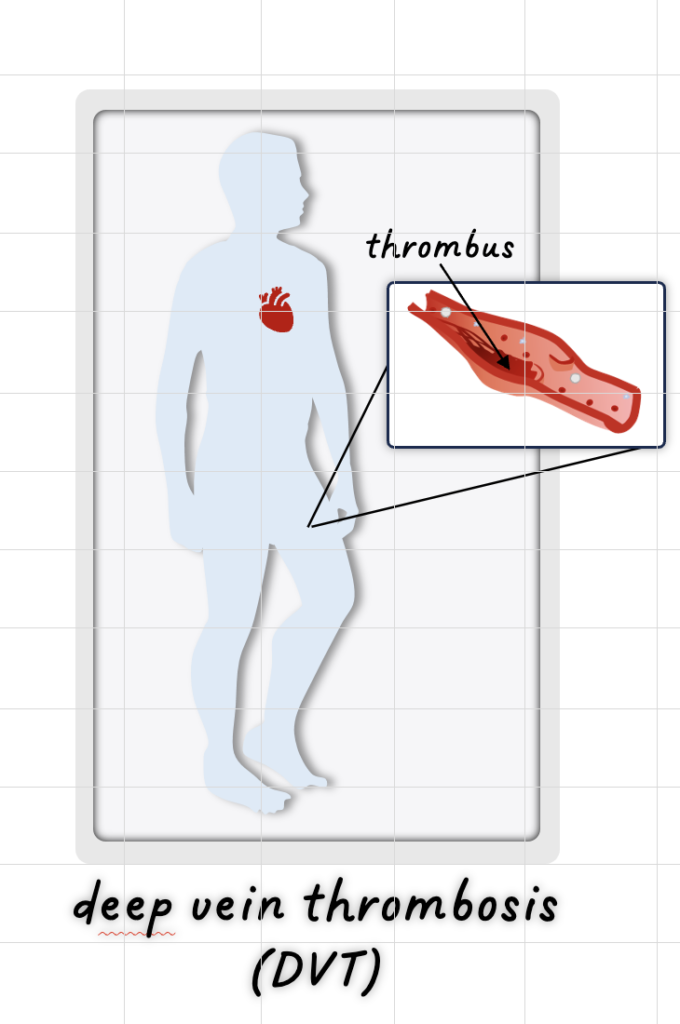
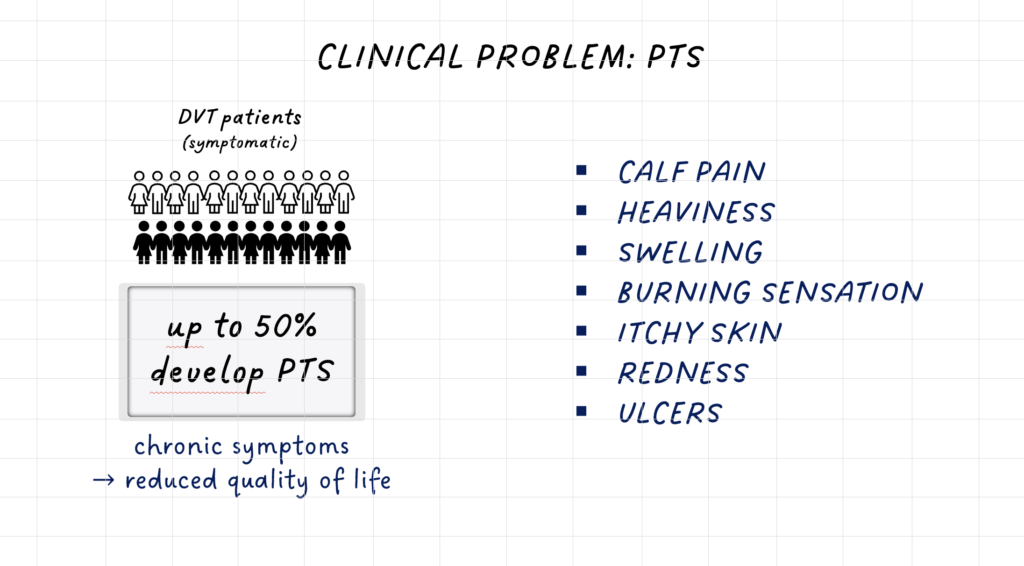
Deep Vein Thrombosis (DVT) and Post-Thrombotic Syndrome (PTS) are significant medical conditions that pose risks of complications, including pulmonary embolism, chronic pain, and venous insufficiency. Current treatment approaches rely heavily on standard clinical workflows, which do not account for individual patient variability in venous anatomy and physiology. This lack of personalization can lead to suboptimal treatment decisions, increasing the risk of long-term complications.
Solution
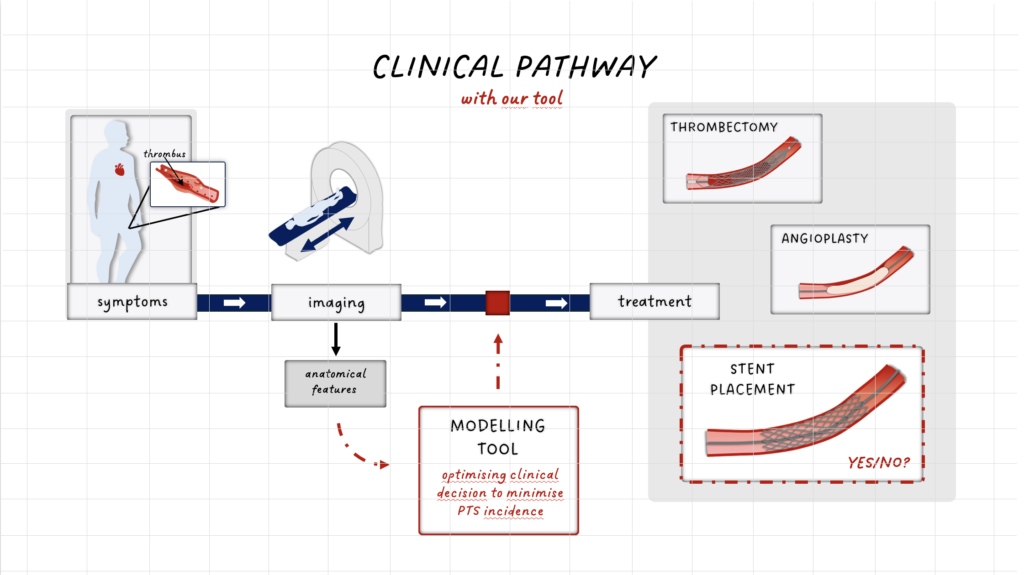
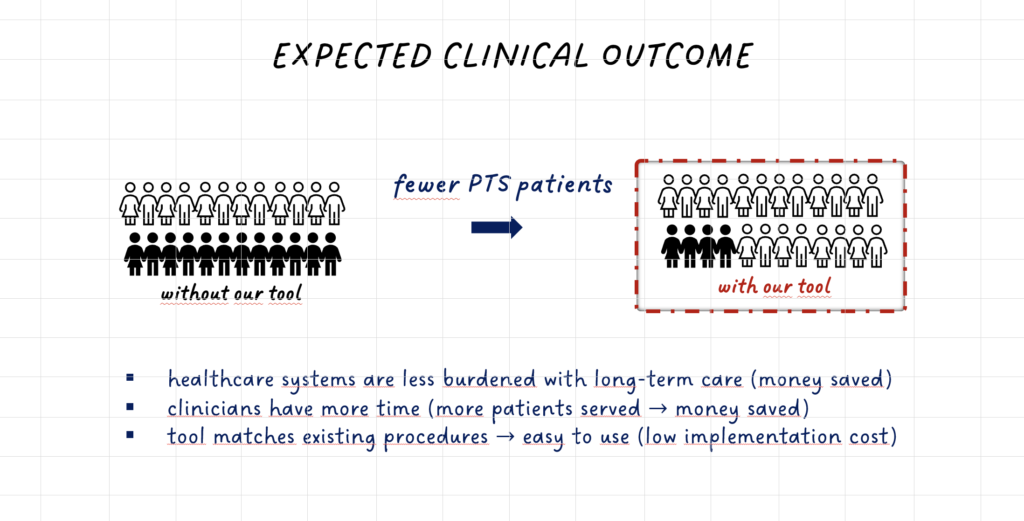
We are developing a tool to help vascular surgeons optimise treatment of deep vein thrombosis and reduce the incidence of post-thrombotic syndrome with personalised numerical models.
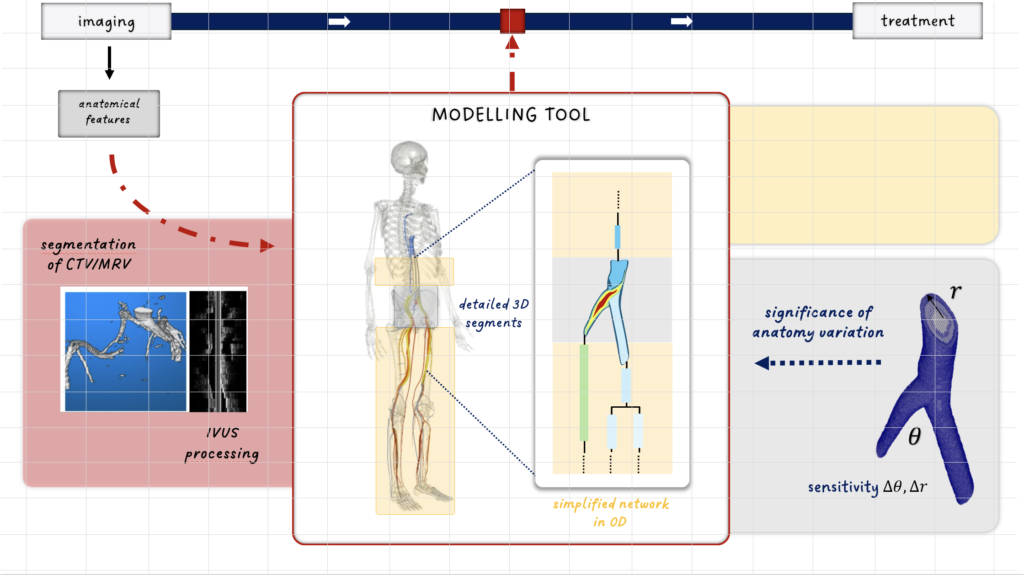
Our solution aims to address this issue by developing a Virtual Digital Twin (VDT) for fluid dynamics.. This tool enhances clinical decision-making by leveraging computational modeling and simulation to assess patient-specific hemodynamic changes, thereby providing additional data to optimize treatment strategies.
Value
Personalized treatment optimization – Our tool quantifies hemodynamic changes specific to an individual patient’s anatomy and physiology, offering a level of personalization that traditional methods lack.
Enhanced clinical decision support – By integrating standard clinical workflow data with simulation-driven insights, our solution supports more informed treatment choices, potentially reducing complications and improving patient outcomes.
Explainable solution – Unlike purely AI-based solutions, our approach incorporates mechanistic modeling, ensuring transparency and interpretability in clinical settings.
Scalability and integration – The tool is designed to be compatible with existing healthcare processes facilitating easier adoption.
Virtual Digital Twin (VDT) for enhanced clinical decision-making
Magdalena Otta
She began her scientific journey in Scotland, graduating with a Master of Physics from the University of Edinburgh in 2021. Her thesis focused on modeling the response of a single cell to fractionated radiotherapy to induce the abscopal effect in cancer treatment.
Currently, as a PhD student with the Sano Modelling and Simulation Team, she is working on modeling venous flow in patients with deep vein thrombosis of the lower limb.
